New Visual Guide Supports Master’s Students in Writing Stronger Research Methodology Chapters
A new research methodology visual guide has been developed to support Master’s students in understanding one of the most important chapters of their dissertation or thesis.
The guide presents the research methodology chapter as a clear and structured academic journey, helping students move step by step from research philosophy and research approach to research design, sampling, data collection, data analysis, ethics, validity, reliability and final methodological justification.
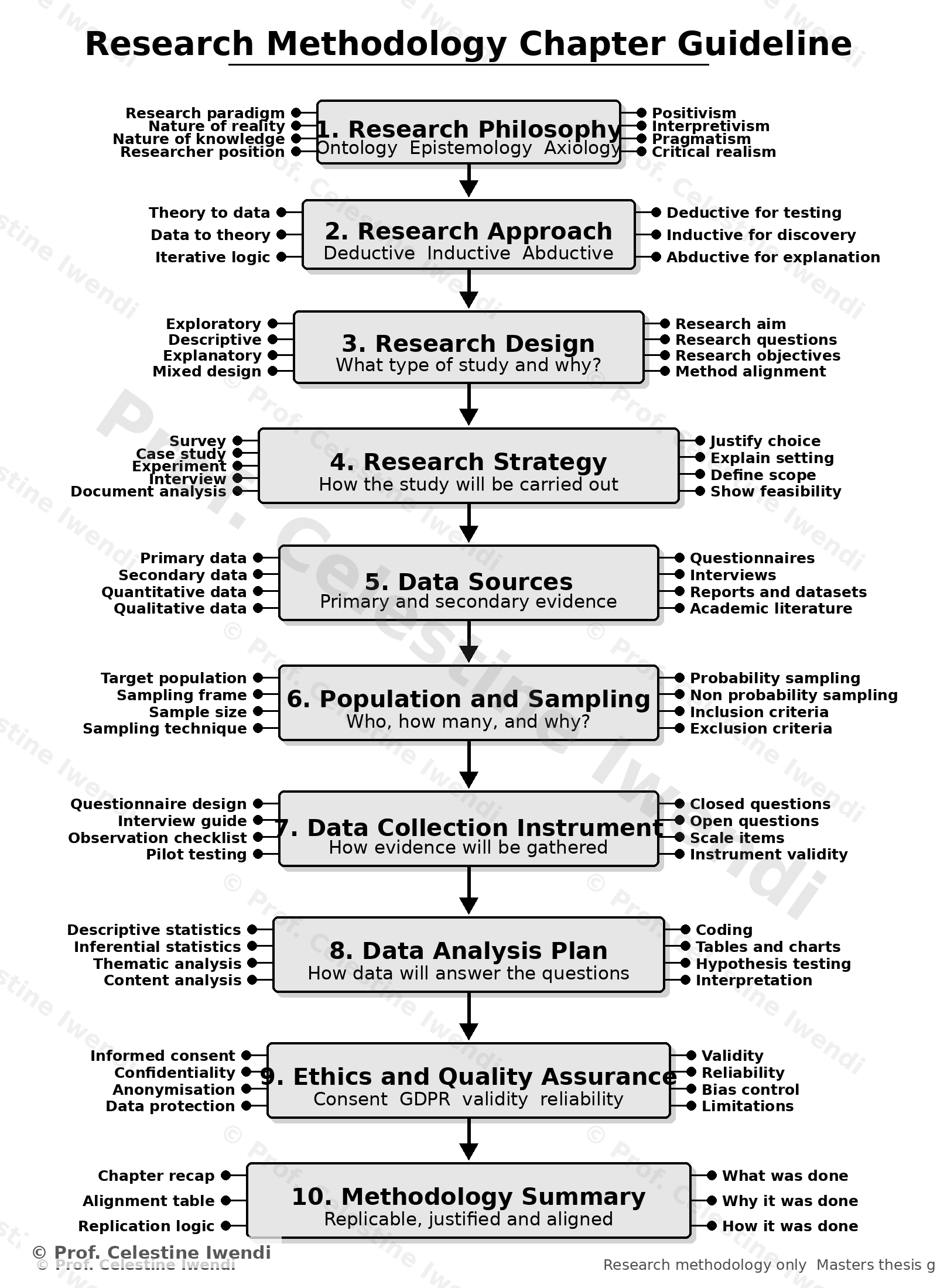 Many postgraduate students often find the methodology chapter challenging because it requires more than simply describing what they did. A strong methodology chapter must explain why a particular approach was chosen, how the study was conducted, why the selected methods are appropriate, and how the research design answers the research questions.
The visual guide addresses this challenge by simplifying the structure of the chapter while maintaining academic rigour. It encourages students to think critically about the alignment between their research aim, research questions, objectives, data sources, sampling choices, ethical considerations and analysis strategy.
Professor Celestine Iwendi, who developed the guide, explained that the purpose is to help students move from uncertainty to clarity in academic writing.
“A good research methodology chapter is the backbone of a strong thesis. It must be logical, justified, ethical and replicable. This guide gives students a practical framework for developing confidence and producing work that can withstand academic scrutiny,” he said.
The guide is particularly useful for students preparing dissertations, research projects, journal articles and postgraduate proposals. It can also support supervisors, research methods tutors and academic writing workshops by providing a simple visual framework for teaching methodology development.
By presenting methodology as a connected process rather than a list of isolated sections, the guide helps students understand how each part of the chapter contributes to the overall credibility of their research.
This initiative reflects a wider commitment to strengthening postgraduate research skills, improving dissertation quality and supporting students to produce academically defensible, ethically sound and professionally presented research.